
Venue: daphne Indigenous artist-run centre (5425 Av. Casgrain Unit 103, Montreal, Quebec H2T 1X6) Date: October 3, 2026 Doors: 7:00 PM Performance: 7:30 PM
Tickets: $20 in advance / $20 at the door NOTAFLOF
Advance Tickets: https://www.zeffy.com/en-CA/ticketing/moe-clark-melody-mckiver-at-daphne
Facebook Event: https://www.facebook.com/events/1731092644668182
Co-presented with daphne Indigenous artist-run centre.
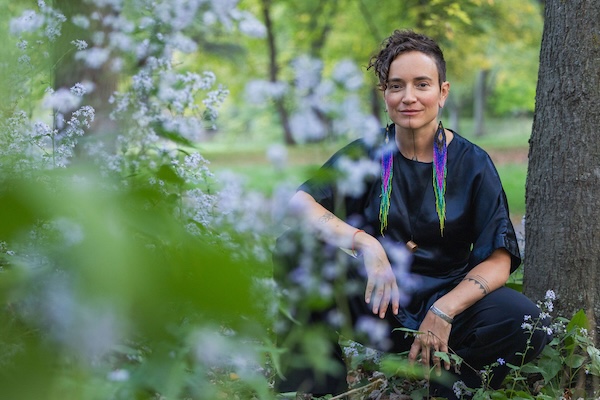
âpihtawikosisâniskwêw (Michif/mixed-settler) multidisciplinary artist Moe Clark (she/they) is a 2Spirit singing thunderbird. Born and raised in Treaty 7, they are a proud member of the Métis Nation of Alberta. Currently they reside as a guest in Tio’tiá:ke/ Mooniyang/ Montréal (QC) where she works as an artist and educator. A dedicated nêhiyawêwin (Plains Cree language) and Michif language learner, Moe collaborates intimately with Elders and knowledge keepers to advance language resurgence through song-based practices. She works across disciplines of vocal improvisation, sound design, land-based oskapêwis facilitation (ceremonial Elder apprenticeship), and performance creation, to create work that centres embodied knowledge, 2Spirit Indigenous resurgence, and creative kinship.
Moe’s last solo album “Within” toured across North America and her collaborative video poem “nitahkôtân” won best Indigenous language music video at the ImagiNative film festival. Moe’s poem “committing a dream / pawâkan Palestine” won the 2024 Ian Ferrier Spoken Word Prize through the Quebec Writers’ Federation. Since 2017 Moe’s hosted mâmawi musique, a weekly podcast on Espaces Autochtones, highlighting Indigenous music around the globe.
Moe completed their Master of Arts at Concordia University highlighting 2Spirit resurgence through drum carrier practices and song creation. Their Masters research and creation was awarded a 2025 Concordia University Social Justice Fellow and a 2025 Certificate of Excellence from the National Network Environment for Indigenous Health Research for innovative research into healing practices through song creation. Moe has performed the world over, including the Lincoln Centre (US), Sydney Opera House (AU) and Origins Festival in London (UK).
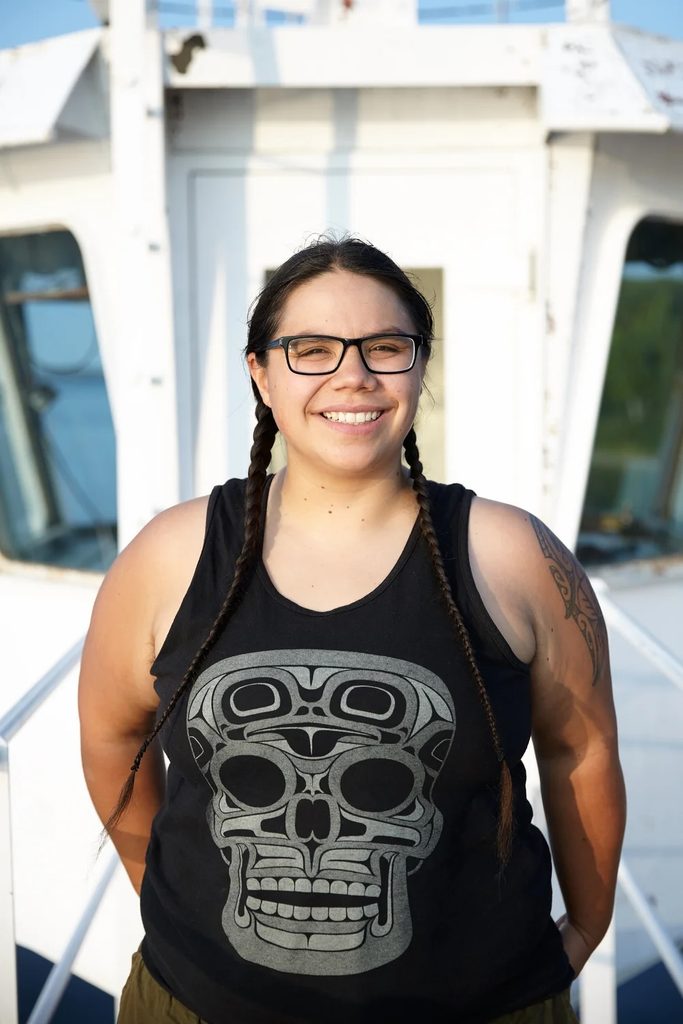
Melody McKiver’s (they/them, do not use any other pronouns) musical work integrates electronics with Western classical music to shape a new genre of Anishinaabe compositions. A proud member of Obishikokaang Lac Seul First Nation, Melody is currently Assistant Professor of Indigenous Music (tenure-track) with the Desaultels Faculty of Music at the University of Manitoba and a member of the Mizi’iwe Aana Kwat (LGBTQ2S+ Council) within the Anishinaabe Nation of Treaty #3. They are the 2020 recipient of the Canada Council’s Robert Flaming Prize awarded annually to an exceptionally talented young Canadian composer, and a recurring invited participant in the Banff Centre for the Arts’ Indigenous Classical Music gatherings.
A frequent performer across Turtle Island, Melody has performed at the National Arts Centre, Luminato Festival, Vancouver’s Western Front, and the Toronto International Film Festival. They have shared stages with Polaris Prize winners Lido Pimienta, Tanya Tagaq, and Jeremy Dutcher, and performed with acclaimed filmmaker and musician Alanis Obomsawin. As a composer, Melody has a growing body of chamber and choral works. Notably, they were commissioned by Soundstreams and Jumblies Theatre to compose Odaabaanag, a string quartet responding to Steve Reich’s Different Trains, drawing on interviews conducted with Anishinaabe elders from Melody’s. Melody has scored several films and was invited to the Berlinale Talents Sound Studio as a music and composition mentor for the 2020 Berlin International Film Festival. Additional commissions have included Cluster Festival, Marina Thibeault, Duo AIRS, Brandon University, Megumi Masaki, Carnegie Mellon University, and TORQ Percussion with the Elora Singers. Upcoming projects include a setting of Métis author Katherena Vermette’s poem river woman for the Elora Singers and TORQ Percussion Quartet, and a full-length album in 2023. Melody holds an MA in Ethnomusicology from Memorial University and a BFA in Music and Indigenous Studies from York University.
daphne is an Indigenous artist-run centre in Tiohtià:ke / Mooniyang / Montreal. Through exhibitions and related programming, we promote contemporary Indigenous art and artists. We favour critical, respectful exchange with our various communities, peers and audiences, to advance a culture of peace. daphne gratefully acknowledges the support received from all our relations, families, friends, communities, the Conseil des arts de Montréal, the Canada Council for the Arts and the Conseil des arts et des lettres du Québec. Niá:wen sewakwé:kon / Gichii miigwetch / Thank you to all of you.