
Venue: Toscadura (4388 St Laurent Blvd, Montreal, Quebec H2W 1Z5) Date: October 10, 2026 Doors: 8:00 PM Music: 8:30 PM
Tickets: $20 in advance with taxes and fees / $20 at the door NOTAFLOF
Advance Tickets: https://tickets.venuepilot.com/e/ava-mendoza-soledad-coyoli-a-confirmer-2026-10-10-la-toscadura-montreal-c6a056
Facebook Event: https://www.facebook.com/events/2604162766693876
Co-presented with Mardi Spaghetti, Negative Capabilities and Smallscale Music.
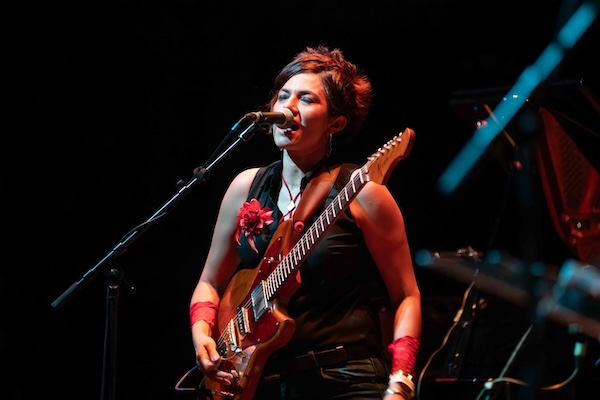
Ava Mendoza is a Brooklyn-based guitarist, singer, songwriter and composer. Best known for her solo guitar and vocal performances, and as the leader of the experimental rock band Unnatural Ways, she has received critical acclaim for her guitar work’s compelling combination of technical virtuosity and visceral impact. In any context she is committed to bringing expressivity, energy and a wide sonic range to the music.
Mendoza has toured throughout the U.S. and Europe and recorded/performed with musicians including Carla Bozulich, Malcolm Mooney (CAN), Bill Orcutt, Abiodun Oyewole (Last Poets), Mike Watt, Adele Bertei, Mick Barr, William Hooker, Nels Cline, Matana Roberts, John Zorn, Jamaaladeen Tacuma, Fred Frith, William Parker, Hamid Drake, John Zorn, ROVA, Negativland, the Violent Femmes, and members of Caroliner. Recordings are available on labels Tzadik, Astral Spirits, Weird Forest, Clean Feed, Resipiscent, and New Atlantis. She was featured as one of Guitar World‘s “10 Female Guitarists You Should Know”.
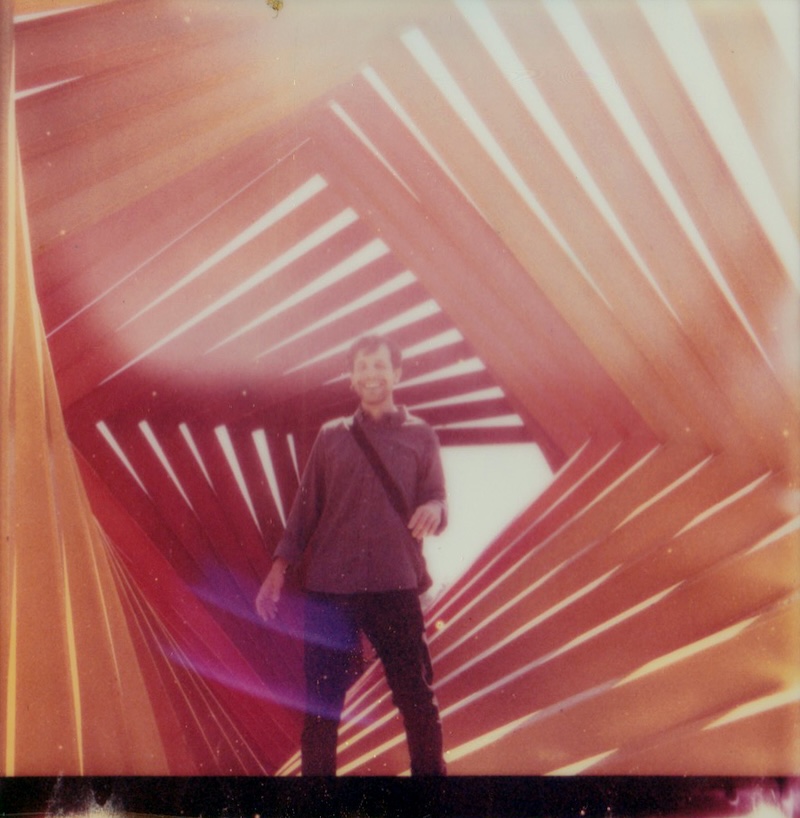
Soledad Coyoli grew up surrounded by the surrealist paintings of Leonora Carrington and Remedios Varo, her grandmother’s sculptures, La Malinche, La Llorona, the robot parts their uncle used to build, and the sacred music her father listened to. Their sound work draws inspiration from the tradition of Mexican – Latin American song and explores the intersection of different languages, cultures, and technologies, as well as their Nahuatl roots (their name means “bell” in Nahuatl). Their music, recipient of the Unesco-Aschberg bursary in 2014, has been presented at some of Mexico’s most important cultural centers, such as the MUAC (University Museum of Contemporary Art), the Franz Mayer Museum, and the Center for Digital Culture in Mexico City.
Since arriving in Tiohtiá:ke/Mooniyang/Montréal, their work has taken a new direction: the voice and the body as fluid, mysterious, mutable and collaborative materials. Soledad explores hybrid musical and bodily territories, in search of a root—an identity—a nepantla, a Nahuatl word often translated as “the land in the middle” that they might call “home.”
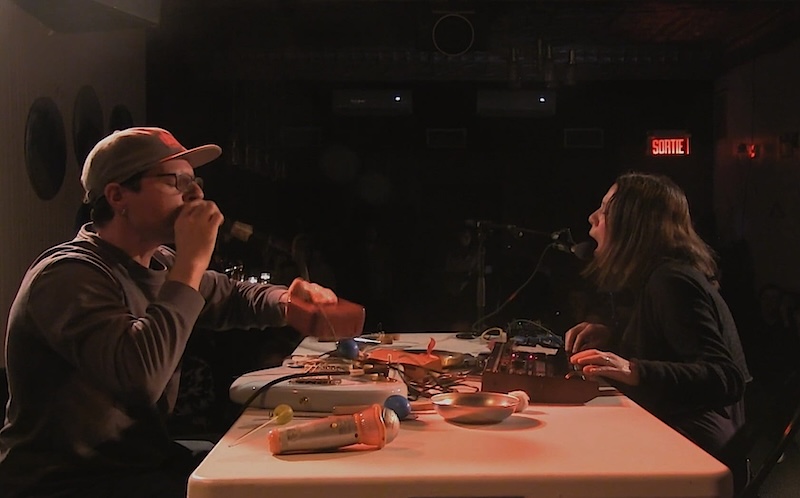
Using synthesizers, electronic devices, quirky objects, and machines that are more or less well-behaved, the duo Acrostiche (Belinda Campbell and Raphaël Foisy-Couture) crafts music built on repetition, collisions, and tension. Somewhere between play and construction work, control and overflow, they build a sound machine in real time — one whose parts occasionally seem to have been installed the wrong way around. Somehow, though, it still runs. An album is also expected to emerge from the process sometime in 2027. Campbell brings a multi-(in)disciplinary practice that moves between music, performance, and visual arts; Foisy-Couture brings a long involvement in improvisation, instrument repurposing, and tinkering of all kinds.